Tanker disruptions in Hormuz kept oil prices steady despite surplus forecasts
Indian refiners face higher shipping costs as disruptions in the Persian Gulf reduce the number of available tankers.
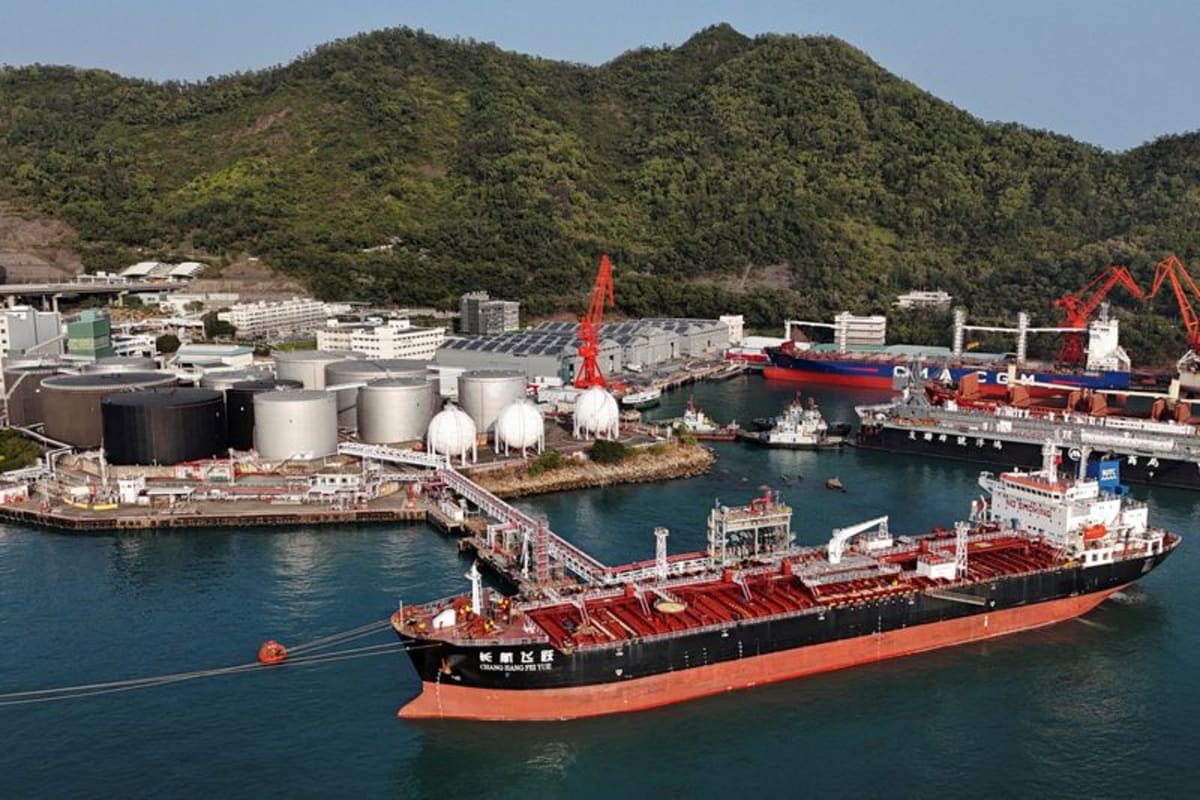
Tanker disruptions in the Strait of Hormuz offset downward pressure on oil prices from rising US crude inventories and forecasts of a global surplus, Reuters reported on Nov. 19. Oil prices settled little changed on Thursday.
A refiner can face cheaper barrels and dearer transport at once, and that is the split now shaping the oil market. Reuters reported on Nov. 19, in a report carried by AOL, that India’s oil imports from Saudi Arabia exceeded those from the United Arab Emirates in October as Riyadh offered discounted cargoes. Indian refining sources said those discounts offset high freight costs. Livemint reported that the price of US sour oil has plunged as refiners have ample barrels to choose from.
The shock that held the market up was concrete. Two oil tankers hit naval mines in the Strait of Hormuz on Thursday and exploded, Iran’s navy said in a statement carried by state media, according to Reuters.
The loss account is already large. The International Energy Agency said cumulative losses from the Middle East conflict had reached 2.8 billion barrels of oil and 60 billion cubic meters of gas supply from the Gulf, CNBC reported.
Supply data cut the other way. Saudi Arabia’s crude exports rose nearly 21% in September from August to 5.38 million barrels per day, the Joint Organizations Data Initiative reported, reinforcing concerns of a supply glut.
The contradiction is why the price did not move much. A Reuters market comment said crude oil was caught between growing supplies and the continuing threat of war-related disruptions. That sentence is doing more work than the settlement price: it separates the barrel from the ship that has to move it.
LSEG analysts gave the ship side its best evidence. Regional supply may keep recovering through alternative routes, they said, but the latest vessel data suggested that normalization of flows through Hormuz was still not possible under current conditions.
India shows how refiners respond when the transport leg becomes scarce. Reuters reported that India’s oil imports from Saudi Arabia exceeded those from the United Arab Emirates in October for the first time since the Iran war disrupted regional supplies, with Riyadh offering discounted cargoes to regain market share.
India’s oil imports hit a record 5.58 million barrels per day in October, trade data showed, even as forecasts pointed to a global surplus.
Indian refining sources told Reuters that the Kingdom offered crude discounts to offset high freight costs, making its oil more competitive against supplies from other Middle Eastern producers and Russia. The discount is a bargaining move: pay less for the barrel to make room for dearer transport.
The Economic Times reported Friday that Indian refiners are rushing to lock in tankers on long-term contracts as persistent disruptions in the Persian Gulf drive up freight costs and tighten vessel availability. Those contracts address freight risk.
Reliance already has about 25 crude and products tankers on time charter, which has helped it mitigate freight risks, Srinivas Tuttagunta said on an earnings call, according to the Economic Times. Indian Oil has three crude tankers and nine liquefied petroleum gas carriers on time charter, Finance Director Anuj Jain said, the same report said.
Surplus Still Has a Case
The simpler bearish reading has real support. TMGM reported that expectations of global oil supply exceeding demand strengthened after US crude inventories recorded a bigger-than-anticipated increase last week. Livemint reported Friday that the price of US sour oil had plunged as oil from Venezuela, Canada and the Middle East gave refiners ample barrels to choose from.
Mars moved from a record premium to a steep discount. Livemint reported that Mars had notched a record $17.50 premium at the peak of Middle Eastern supply disruptions in March and April, even as futures traded for over $100 a barrel. The same outlet reported that Mars later fell to a steep discount, making it cheaper for US refiners built to process heavier crude.
A pension saver or broad stock index fund holder would feel this split through the oil price, not through the vessel list. If tanker disruptions keep offsetting inventories and surplus forecasts, oil-linked costs could stay supported; if surplus pressure dominates, that support could ease.
The sharper exposure sits with refiners and shipping books. A refiner without long-term tanker cover remains exposed to freight costs, while chartered tonnage offers some protection if vessels tighten. That advantage could narrow if Hormuz flows normalize.
Over the next month, the judgment rests on the next public account of Hormuz flows and surplus pressure: disruption still offsetting supply confirms it; normalization through Hormuz breaks it.
What followsConditional research · not advice
From the storyThe rival case is that surplus supply will cap prices if Hormuz flows normalize.3 links later: a hypothesisIf secured tanker capacity becomes the scarce input while surplus crude signals remain, refinery exposure shifts toward freight access rather than outright crude scarcity.
Every checkpoint holds
23%
Uncalibrated estimate that every checkpoint holds. Not a measured probability.
Why it is not the obvious read
The downstream finding departs from the surplus-price read because the bottleneck is passage and tanker cover, not the volume of crude available.
LSEG analysts said: "Although regional supply may continue to recover through alternative routes, the latest vessel data suggests that normalization of flows through Hormuz is still not possible under current conditions,"
Indian refiners are rushing to lock in tankers on long-term contracts to secure crude supplies as persistent disruptions in the Persian Gulf drive up freight costs and tighten vessel availability.
AssumesFollow-up reports continue to describe constrained Hormuz flows as relevant to tanker availability for regional crude cargoes.
BottleneckIf Hormuz flow normalization remains constrained, refiners dependent on regional cargoes have a stronger need to arrange tanker capacity ahead of spot requirements.
Time-charter tanker fleets can mitigate freight risk by giving refiners access to vessels before spot-market availability tightens.
AssumesRefiners that already hold time-charter tanker access can use that access while other refiners compete for spot-market vessels.
If advance tanker cover remains valuable, refiners with existing time-charter fleets gain a freight-procurement edge over refiners more exposed to spot tanker availability.
If freight pressure lasts while crude supply grows, tanker access gains value and the barrel itself loses scarcity value.
AssumesFreight pressure remains relevant while crude supply signals keep reducing the scarcity value of the barrel itself.
If secured tanker capacity becomes the scarce input while surplus crude signals remain, refinery exposure shifts toward freight access rather than outright crude scarcity.
The bottleneck
Indian refiners are rushing to lock in tankers on long-term contracts to secure crude supplies as persistent disruptions in the Persian Gulf drive up freight costs and tighten vessel availability.
Who is exposed
Institutions with refinery or shipping exposure carry risk through freight costs, not only crude prices.
What to watch, how long it must last, where it breaks
What to watch
These checkpoints are not on the public ledger.
- Link 1
Vessel data, refinery procurement comments, or shipping coverage describe whether Hormuz flows have normalized under current conditions.
Checkpoint 1 · due Not on the public ledger
By the resolution date, do vessel data or refinery reports still show that flows through the Strait of Hormuz have not normalized under current conditions?
Resolve YES if the cited resolver reports that flows through the Strait of Hormuz have not normalized under current conditions; resolve NO if it reports that flows have normalized under current conditions. Settled by www.tmgm.com.
Uncalibrated estimate 57%
- Link 2
Refinery disclosures or shipping reports describe time-charter coverage, spot tanker availability, and freight-risk mitigation.
Checkpoint 2 · due Not on the public ledger
By the resolution date, do refinery disclosures or shipping reports still describe Indian refiners arranging long-term tanker cover to secure crude supplies?
Resolve YES if the cited resolver reports that Indian refiners are arranging long-term tanker cover to secure crude supplies; resolve NO if it reports that this activity has stopped or that spot tanker availability is no longer tight. Settled by m.economictimes.com.
Uncalibrated estimate 49%; 62% if checkpoint 1 holds
- Link 3
Market coverage describes whether crude supply remains ample and whether freight costs or vessel access remain a constraint for refiners.
Checkpoint 3 · due Not on the public ledger
By the resolution date, do market reports still describe ample crude choices while freight costs or vessel access remain a constraint for refiners?
Resolve YES if the cited resolver reports both ample crude choices and continuing freight-cost or vessel-access pressure; resolve NO if it reports that freight pressure has faded or that crude scarcity is the main constraint. Settled by www.livemint.com.
Uncalibrated estimate 43%; 65% if checkpoint 2 holds
How long it must last
- Link 1
The next observable point is the first follow-up coverage before the resolution date that addresses Hormuz flow normalization or tanker availability.
- Link 2
The next observable point is the first refinery or shipping update before the resolution date that addresses long-term tanker cover or spot tanker availability.
- Link 3
The next observable point is the first market update before the resolution date that discusses both crude availability and freight pressure.
Where it breaks
- Link 1
Reports say Hormuz flows have normalized under current conditions and do not describe tight vessel availability for regional crude cargoes.
- Link 2
Reports say spot tanker availability is ample and time-charter coverage is not described as mitigating freight risk.
- Link 3
Reports show freight pressure easing while crude scarcity, rather than vessel access, becomes the main constraint for refiners.
What would change it. Reports that flows through Hormuz have normalized and that inventories or surplus forecasts dominate oil settlements break it.
Sources
AOL Nov. 19tmgm.com Nov. 19livemint.com Nov. 20economictimes.com Nov. 20CNBC Nov. 18
28 statements, each tied to its sourceWhat each statement rests onHow ARCANE checks a story