Washington’s push to import Venezuelan oil runs into crumbling docks and shipping delays
U.S. sanctions fell in days but Venezuela’s main oil export terminal cannot ship at volume for years.
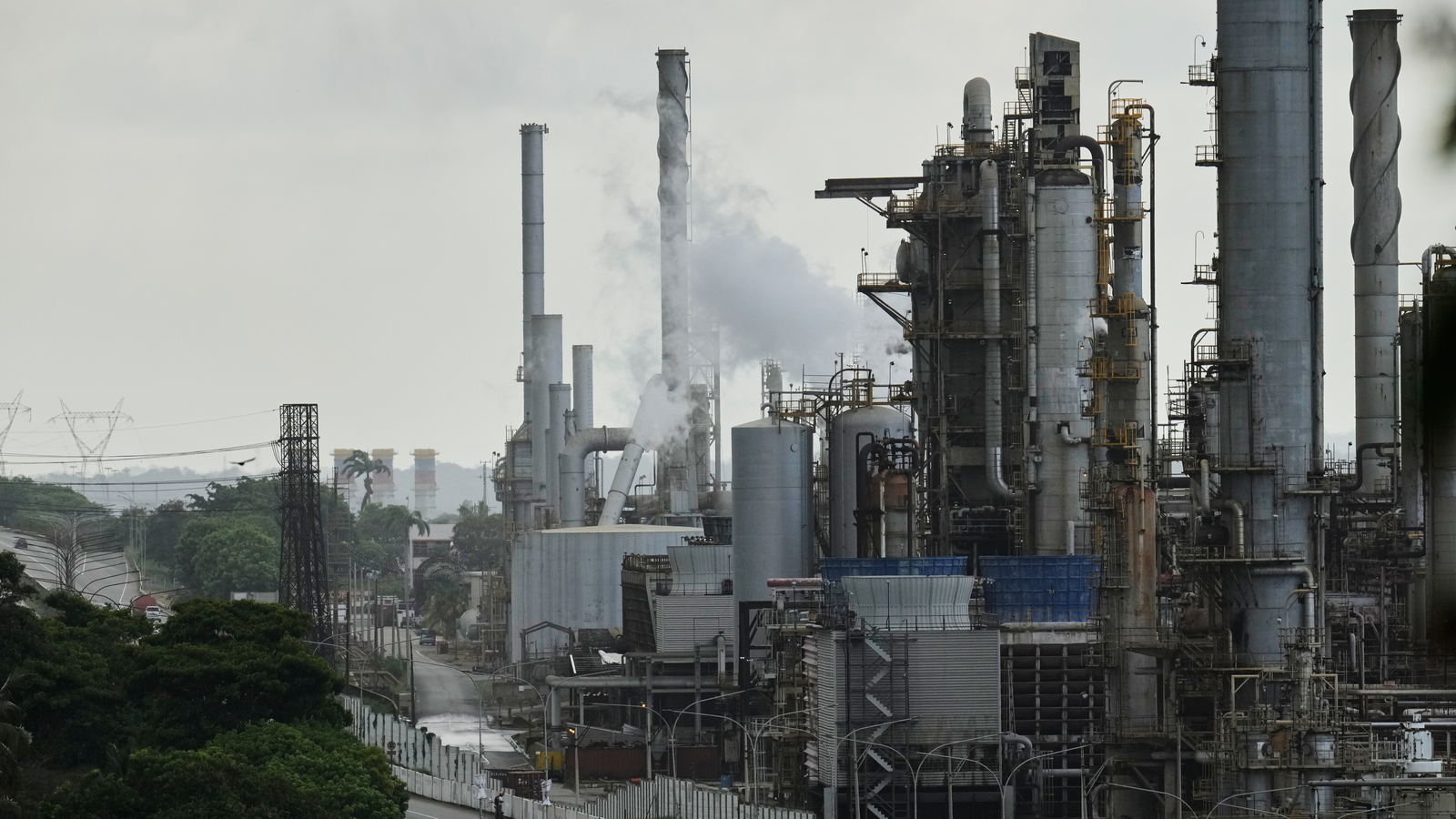
Political shift, oil arrivals
Two facts sat side by side this week and refused to reconcile. On Tuesday in Houston, the Energy Department's Under Secretary Kyle Haustveit said roughly half of Venezuela's oil output now sails to the United States, about 500,000 barrels daily out of roughly 1.25 million produced, according to Reuters on August 18.
One day later came the other shoe. Reuters reported tankers stacking up off PDVSA's Jose terminal, waiting as long as thirty days to load crude, because rusted pumps, blackouts and bad blending have turned the country's main export gateway into a choke point, according to Reuters on august 21. Washington spent eight months prying Venezuelan barrels loose from sanctions, and the barrels arrived to find no dock waiting.
The speed of the political reversal still reads like fiction. American forces seized Nicolas Maduro on January 3rd and flew him out through Brazil, leaving his vice president running the country, Reuters reported via U.S. News on January 6. Within two weeks the Treasury was drafting an expanded license for Chevron, with Energy Secretary Chris Wright saying Washington was moving "as fast as it can," according to Reuters on January 16.
By February 10th, OFAC's General License 48 authorized Americans broadly to explore for, develop and produce Venezuelan oil alongside the state company, according to Womble Bond Dickinson on february 17. In March the rationale went public: Treasury eased the regime explicitly to add world supply during the war with Iran, U.S. News and Associated Press reported on March 18.
Each actor wants something different from the same barrels. The White House wants cheap heavy crude into Gulf Coast cokers and a demonstration that regime change pays in oil. Chevron wants its Orinoco joint ventures back at full rate, and moved first, consolidating stakes in Petroindependencia and Petropiar in an asset swap announced this spring, Chevron's press release in Q2 2026 stated.
PDVSA's vice president Jovanny Martinez stood up in Houston and pitched the room directly, telling American companies "go to Venezuela to invest" and promising output of 1.245 million barrels a day by the end of August, according to New York Times via Dnyuz on august 20. Service companies smell fees: SLB and Hunt Oil signed field development agreements with Caracas this month, as Energy Connects reported in August 2026.
Decay and physical limits
The trigger is the license stack; the pressure underneath is twenty years of decay nobody repealed. Jose terminal alone handles around seventy percent of Venezuela's exports, and shipping data show it repeatedly stalling on equipment failures, power cuts and crude that arrives out of specification, Modern Diplomacy reported on August 21.
Exports are up 19.7 percent since January by PDVSA's own count, but they have flattened near 700,000 barrels shipped to America plus discounted cargoes elsewhere because the ceiling is physical, not legal, BOE Report noted on August 18. A signature from Treasury lifts a sanction overnight. A dredged channel, a rebuilt boiler, a steady grid: those take years and billions, and the money has not shown up yet.
After the 2015 nuclear deal, Iranian barrels returned to market fast because the fields had been throttled, not gutted; Tehran added roughly a million barrels per day of exports within eighteen months of sanctions relief, and the constraint was OPEC politics, not hardware. Venezuela is not Iran. Its industry was never merely switched off; it was cannibalized. Workers left, refineries corroded, and the diluent imports that keep extra-heavy crude fluid became a bargaining chip rather than a pipeline. The counter-example argues the optimists' case only if you believe capital moves faster than corrosion, and the tanker queue off Jose is the evidence that it does not.
Debt and bond pricing
If exports cap near current levels while bondholders price a boom, someone holds paper that assumes a flow that cannot arrive. Caracas launched what may be the largest sovereign restructuring ever attempted, with public debt disclosed near 240 billion dollars against the 150-to-170-billion analysts had assumed, Etude reported in May 2026. Defaulted Venezuelan bonds already rallied from around thirty cents to forty cents on the dollar once the seizure made restructuring thinkable, OMFIF reported in February 2026.
Those prices embed tripled or quadrupled production, which OMFIF's analysts note would require something like 100 billion dollars over a decade (OMFIF, Feb 2026).
The gap between what the docks can carry and what the bonds assume is where somebody loses money.
Who profits first is clear enough. Gulf Coast refiners configured for heavy sour crude get discounted feedstock without the discount's usual geopolitical risk, since Haustveit says contracts will be honored, Hydrocarbon Processing reported on August 18. The fixers do well too: Fortune profiled a turbine-and-oil mogul now acting as the administration's broker for favored American deals in Caracas, according to Fortune on august 17.
Who pays is equally clear: China, which took heavily discounted Venezuelan crude for years and watched those cargoes dry up as Washington rerouted them north (industry shipping commentary, Feb 2026); and the shadow-fleet owners whose dark-tonnage premiums collapse as legal trade returns, with Panama-flagged Centuries seized carrying two million barrels of Venezuelan crude, Lloyds List reported in 2026.
The consequence worth watching sits further down the chain. Every barrel Washington pulls west from Venezuela tightens the discount structure that carried sanctioned oil to Asia, pushing Beijing further onto Russian and Iranian barrels and raising tonne-miles across the Indian Ocean. That is good for tanker owners with clean papers, bad for anyone holding vessels that only dark markets wanted. And it hands the United States a lever it has openly claimed: reporting describes Washington designing a controlled framework for Venezuelan revenue flows before the barrels fully return, La Era reported in August 2026. Control of the spigot, not the barrels, is the actual prize.
So test the read against one question. Can the ports catch up before the politics flip again? If Caracas funneled even a slice of current export revenue into Jose's berths and the grid, the thirty-day waits should compress within quarters, and the export line would climb past current levels toward the two-million figures officials whisper about. That is the confirmation. What breaks it is simpler. Another blackout season, a quality dispute that strands cargoes, or a Washington that discovers licenses are easier to issue than to keep, as every Venezuelan producer learned the last three times this movie ran.
The judgment the numbers force is uncomfortable for both camps. Sanctions were never the binding constraint on Venezuelan oil; they were the excuse. The constraint is a terminal that handles seven of every ten barrels exported and cannot survive a power cut, Modern Diplomacy reported on August 21. Washington won the political argument in eight months.
Rebuilding what two decades of neglect consumed will take longer than any administration's attention span, and the tankers idling off Puerto La Cruz are measuring that gap in dollars a day.