Qatar’s LNG shipments choke as Hormuz remains shut, unseating global gas trade patterns
With the Strait of Hormuz closed for months, Qatar cannot reroute its LNG, forcing buyers to seek alternatives and reshaping long-term global contracts.
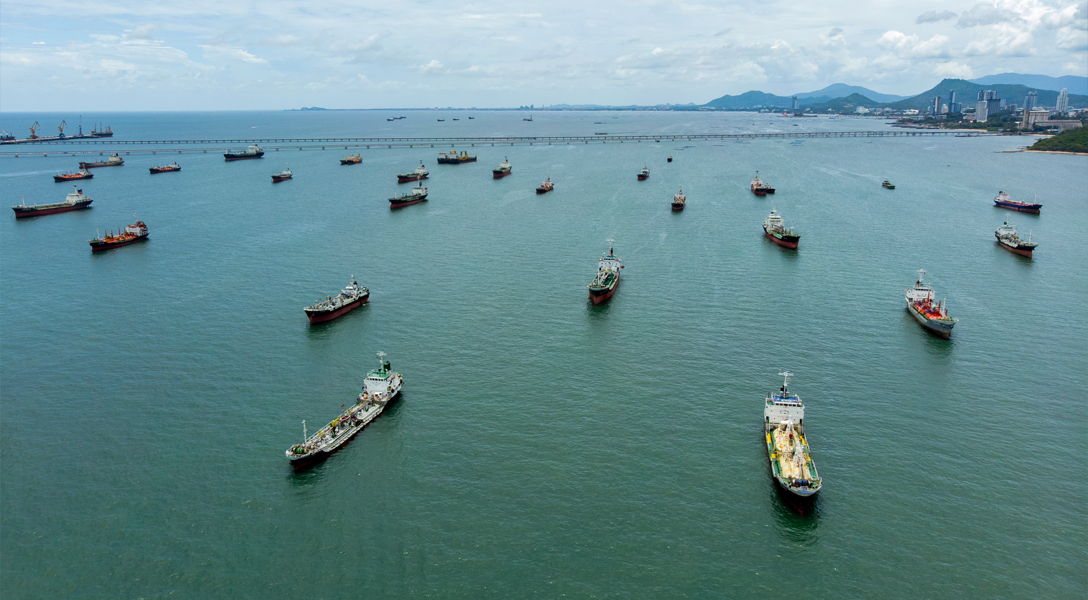
Qatar sells roughly a fifth of the world's liquefied natural gas, and every molecule of it leaves home through one door, the Strait of Hormuz, because gas has no pipeline out of the Persian Gulf, as Euronews noted on August 3.
That door has been closed to commercial shipping for the better part of six months, Pipeline & Gas Journal reported on August 21. The result is the oddest market on Earth: the biggest seller on the planet has largely stopped selling, and the price of the cargo it cannot ship is climbing toward the year's highs.
Oil faced the same wall and climbed over it. In past closures the barrels found overland highways—Saudi Arabia's East-West pipeline and a line to Fujairah on the Arabian Sea—so crude kept moving even when Hormuz did not. Gas has no such road; a molecule must be loaded onto a cryogenic carrier, and the carrier must pass the strait or the gas stays liquid in a tank, as Tech Times explained on August 2. The bulk of Qatari volumes head to Asia, and none of them can take a detour, according to a US market analysis from 2026.
The Islamic Republic closed the waterway and holds it as its one irreplaceable bargaining chip, imposing pain on the world at almost no cost to Tehran, which ships little LNG itself. On the other side sits QatarEnergy, operator of the Ras Laffan complex Qatar calls the world's largest LNG production facility, source of the bulk of the country's 77 million tonnes a year of capacity, according to QatarEnergy in 2026 and Euronews on August 3.
Between them stand the buyers, the European utilities and Asian importers holding long contracts they cannot now fill.
This week pushed prices up twice over, once by violence and once by time. Iran said on Friday that its answer to new American threats would be devastating, Pipeline & Gas Journal reported on August 21, and the previous weekend brought fresh attacks on vessels in the strait, follow-ons to the three ships—the Al Rekayyat, the Wedyan and the Cyprus Prosperity—hit in early July according to an August 4 freight market report. The waterway has been effectively shut to commercial traffic for six months, and two ceasefire deals, in April and in June, both collapsed before any convoy flowed freely, Pipeline & Gas Journal reported on August 21.
This is the 1967 Suez closure reprised for the age of gas, with a cleaner counterexample than history usually offers. When Egypt closed Suez, the tanker fleet stretched itself around the Cape of Good Hope, voyages doubled in length, and freight rates reran the map of trade until a new equilibrium formed. When Russia cut pipeline gas to Europe in 2022, Europe answered with a flood of LNG from new American terminals, prices spiked, then normalized within two years. The Suez lesson is that the market redraws around the wall; the 2022 lesson is that the wall is temporary, and so is the premium.
The redraw is happening now at the level of contracts. Pipeline & Gas Journal reported on August 21 that only about 33 LNG loads have cleared the strait in the past six months, roughly five a month against a normal 90 to 100. When a fifth of the world's supply slows to a fraction of its usual pace, the remaining flexible molecules—American, Australian and Russian—become the entire market, and the buyers of the world fight over them.
Watch the tug-of-war between Europe and Asia and you see the book re-drawing in real time. European buyers who normally take most of the flexible American cargoes pulled in only 51% of U.S. exports from March through July, down from 67% a year earlier, while Asia's share doubled from 16% to 29%, according to ICIS ship-tracking data published August 21.
The two regions' benchmarks converged as Europe was forced back into the bidding, with the premium of Asian spot over Europe's TTF collapsing from $3.17 to 83 cents in a single week, Kpler reported on August 13, and Asia's spot price for October delivery reached $22.50, its highest since March 20, per Pipeline & Gas Journal's August 21 report.
The cruelest marker is where prices did not rise. Atlantic LNG freight rates fell to $20,000 a day, the lowest on record for this time of year, with Pacific rates at $61,500, Spark Commodities reported on August 21. A glut of exactly the fleet that cannot transit has pushed Qatar's stranded carriers into the free basins, so moving gas gets cheaper even as the gas itself gets dearer, proof that the wall is a single stretch of sea and the lever is cargo.
Who pays
Europe's gas caves hold the answer. EU underground storage stood at 60.4% on 14 August, down 17.7% from the same date last year, with winter approaching and a maintenance shutdown taking about 1 bcm of Norwegian gas from the Ormen Lange field off the table for the season, according to AGSI+ figures via Global LNG Hub on August 19 and Kpler on August 13. Japan's power-sector stockpiles of 2.03 million tonnes are barely above flat week on week, METI showed via Global LNG Hub on August 19. The buyers who did not lock in long American or Australian supply are the ones who will pay a $20-plus winter.
Who profits
American exporters hold a seller's market outside the wall, with Venture Global's exports up 42%, Pipeline & Gas Journal reported on August 11, and U.S. Gulf front-month cargo valuations at $21.05, the highest since December 2022, per the Journal's August 21 report. Australia keeps the inland Pacific contracts the stranding leaves open. And Qatar, largest of all, is losing customers, not cargoes, because every displaced cargo is a firm deal signed on someone else's terminal, and gas contracts run for decades.
The question that would break the read is whether the premium is physical or speculative, and the honest answer is that it is exactly as real as the physical flow. If Hormuz transits stay near the single ship that moved on 16 August against a normal pace of roughly seventy-three a day, as straits.live counted on August 22, the six-month pattern holds and the premium stays. If a dozen tankers clear the strait in a week, or EU storage climbs back toward an 85% fill by November, the whole thesis unwinds before any signature lands.
Every month Qatar spends outside the market is a decade of contracts written in dollars, signed in Houston and Perth, delivered to Rotterdam and Mumbai, and that is the bill the siege ultimately lands on Qatar's own future order book.
Closing Hormuz did not stop the world's gas, it stopped Qatar's, and the world has already found somewhere else to shop.