UAE suspends all trade with Iran after missile strikes into Gulf waters
While Iranian commanders escalate their rhetoric, Abu Dhabi’s trade cutoff severs Tehran’s last economic link to the outside world.
Tehran answered the lapse by talking offense, while Abu Dhabi answered with a trade bulletin. Iranian commanders let a defensive war slip toward going offensive, and the United Arab Emirates halted all trade, commercial exchange and financial transactions with Iran until further notice, over what it called missile fire into its waters, according to Al Jazeera on august 19.
The missile theatre holds the headlines. The trade ledger decides who blinks first.
Iran's hardliners are declaring strength at the exact moment the economy that stocks the Republic just shut its best window on the outside world.
The trigger is a calendar. Al Jazeera reported on August 20 that the memorandum hammered out in Islamabad was signed on June 17 to open sixty days of talks over the Strait of Hormuz, the waterway that ordinarily carries a fifth of the world's oil and liquefied gas. Under the date sits the slow pressure, a war that began on February 28 and has kept the channel largely shut since.
The wording was slippery enough that Tehran read the shipping clause as handing it the strait, while Washington saw a promise for its escorted routes; Al Jazeera's August 20 account has the two sides striking each other within a fortnight. Trump told the BBC on August 17 that he would not extend the pact.
Washington seeks to exit a fight Trump himself began without allowing Iran command of the chokepoint. CNN reported on August 19 that his administration half-joked the waterway would soon be American territory.
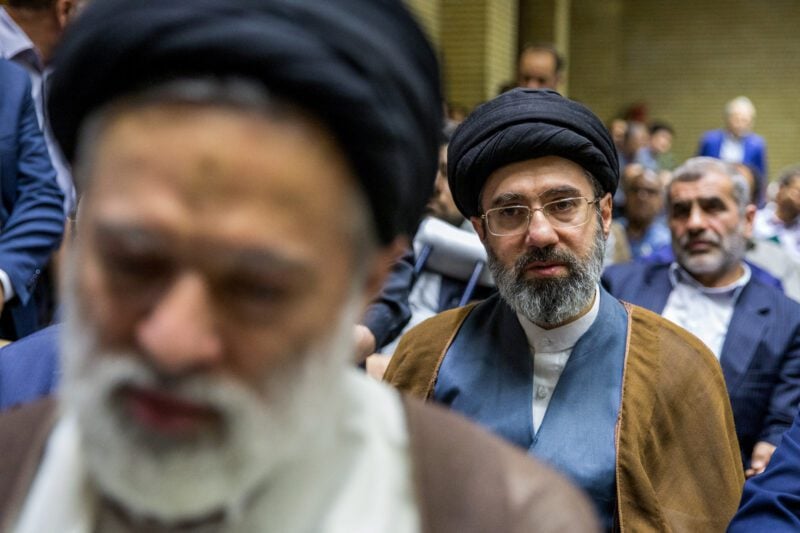
The Emirates want their crude to reach the docks and their money to keep moving, after a half-year in which, by Al Jazeera's August 19 tally, Tehran fired more than 2,200 drones at their territory, killing fifteen people and wounding 246. Iran's new hardline circle, Supreme Leader Mojtaba Khamenei, IRGC chief Ahmad Vahidi and adviser Mohsen Rezaie, wants to turn a war it survived into an edge it never held at a negotiating table, according to CNN on august 19.
Where it thins
The offensive has teeth. The IRGC's political chief Yadollah Javani promises strategic surprises, and Iran's army chief has placed a reward on taking a US soldier, double for a woman, according to Al Jazeera on august 17.
The threats head to sea, tankers, Houthi drones over Saudi shipping, Iraqi militia toward Gulf energy.
Abu Dhabi's own ADNOC says ships of its fleet have been fired on in the war, one crew member killed, figures Al Jazeera passed along on August 20 from Kpler and ADNOC data. None of it opens a route for money to get in.
That is the gap. Dubai has become Iran's largest supplier, ahead of China and Turkiye, providing nearly a third of everything Iran imports, as Al Jazeera laid out on August 19.
The same report carries the rest of the ledger: official goods trade reached $6.2bn in 2023, and the real flow runs far above it, carried by merchants who bought what Western shippers refused to send and re-exported it into Iran, $2.81bn of telephones in one year, on the Observatory of Economic Complexity numbers the story carried.
Mark Kimmitt, a retired US general and former assistant secretary of state, left the old diplomatic table to say the UAE embargo can wound Iran more than any American sanction, because it severs the vein the money moved through.
The freeze of 1941
There is a name for what the Emirates have done, and Washington applied it once before. The freeze of 1941 cut an industrial power's oil and steel, expecting pressure to drag it to a bargain; the squeeze instead pushed Tokyo toward the war it opened at Pearl Harbor. Kimmitt reached for that likeness when he called the embargo bordering on an act of war, according to Al Jazeera on august 19.
The difference this time runs both ways. Japan had almost no oil of its own. The New York Times reported on August 19 that Iran sits on the lane it is fencing and had banked the crude, nearly 80 million barrels of it, before closing the waterway. So the embargo bites Iran's imports and its cash, not its wells.
Hard currency drains first, so Tehran leans on the route that already runs out of the strait, the ship-to-ship transfer, where a tanker goes dark and shifts cargo in neutral water, and the papers are changed so the crude reads as Omani. Kpler's tracking, relayed by Al Jazeera on August 20, has most of the oil and gas carriers that crossed Hormuz this month sailing dark, beacons off, rather than pick the American or the Iranian lane. The next cost settles on the shadow fleet and the insurers asked to price a war that can no longer be waved away.
Who pays first
Who pays first is the Iranian household. Income per head fell from roughly $8,000 in 2012 to $5,000 in 2024, with sanctions already the floor, on the figures Al Jazeera carried on August 19. Now Treasury Secretary Scott Bessent promises isolation the financial record of any nation has never seen. The Emirates pay too, guarding their terminals, the Fujairah export dock and their refineries against the same rock, and Asia's fuel buyers take the margin no shipper can dodge. The crude that stood near $66 a barrel when the fighting began sits near $92.9, having already passed $100 once, according to Al Jazeera on august 20.
Who profits
Who profits is the machinery that moves the frightened barrel. The dark-fleet owners, the paper-flag offices, the transfer crews and the insurers collecting a war-risk premium no peacetime cargo ever paid.
Iran is trying to bank that toll itself, and it has tabled a transit fee of 5% to 7% of cargo value in talks with Oman, while Washington refuses any levy and Muscat floats a smaller figure, so the take is zero for now, but it has already put a price on the lane. Plataforma Media carried the Reuters wire on that on August 6.
The reading holds the day Iran's crude keeps reaching buyers under changed Omani papers while its lawful imports keep shrinking, proof that the offense lines the pockets of the strait's men and not a single kitchen shelf. It breaks the day Abu Dhabi or Muscat quietly opens a formal trade lane within a month, because an embargo that thawed that fast was never a wall. Iran does not need a win at sea; it needs machine parts and food and the wires to pay for both. A country that cannot buy the basics is not waging an offensive, it is rehearsing one.
And the Gulf that has fed Iran for years and has now posted a closed sign is where the war ends. Six months of American weapons raised nothing on that shore. One black-and-white ministry statement did.