Asian LNG price climbs as Hormuz crossings halt and buyers scramble for cargoes
Spot LNG prices in Asia have risen amid a total stop to Hormuz LNG shipments, with traders bidding on future supply as risks of transit escalate.
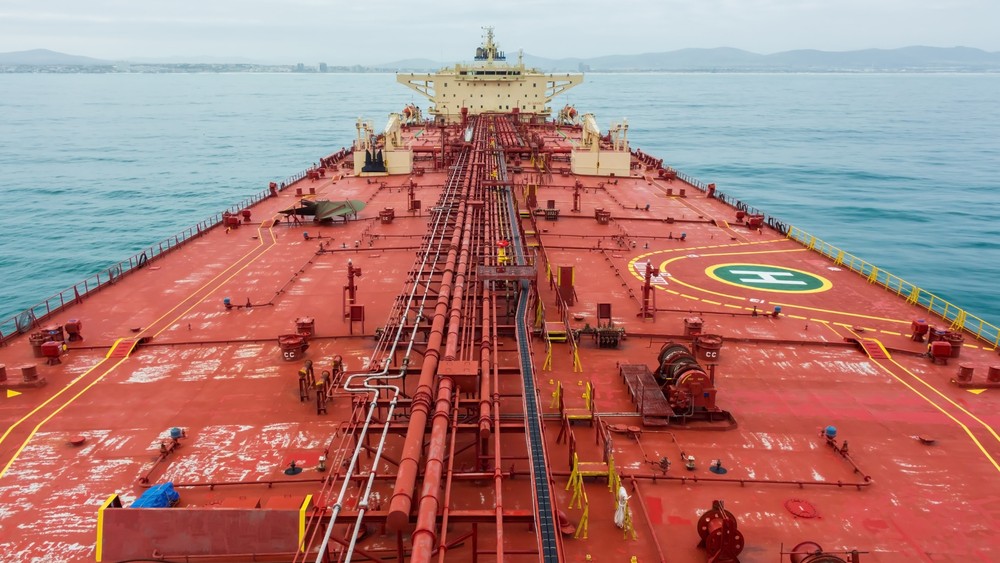
Seven ships crossed the Strait of Hormuz on August 20. None carried LNG. ShipUniverse, citing Kpler data, reported on August 21 that the strait's gas trade had gone to zero for the day.
Yet Asian spot LNG just touched its highest price since March — an estimated $22.50 per million British thermal units for October delivery into northeast Asia, up from $21.30 the week before, by Reuters' August 21 accounting. Buyers are bidding up cargoes that increasingly do not exist to be shipped.
A rising paper price sits over a dead waterway. The premium has survived five months of strikes, force majeure declarations and a blockade measured in single-digit cargoes a month, and traders show no sign of letting it go. What the market is really pricing is whether anything can bring Qatari molecules back before winter — and the physical answer, for now, is no.
Washington supplied this week's spark, threatening what it calls the toughest financial penalties in history aimed at toppling Iran's leadership. Tehran answered that its response would be "devastating," and two prior ceasefires — April and June — have already collapsed within days of being signed, Reuters reported on August 21. Traders read that record and priced accordingly.
"We see the geopolitical premium remaining firmly embedded in the global LNG market," said Arturo Regalado, senior LNG analyst at Kpler, in remarks Reuters published on August 21.
But the spark landed on five months of accumulated damage. Iranian missile strikes in March wrecked trains at Ras Laffan, Qatar's export complex, and QatarEnergy declared force majeure on buyers across China, South Korea, Italy and Belgium.
Chief executive Saad Al-Kaabi put the lost export capacity at 17 percent, roughly $20 billion a year, with full repairs possibly taking five years — figures the Oil Authority carried on April 13.
By early August the damage was still compounding at sea. The GasLog Shanghai was struck leaving the strait, weeks after the Al Rekayyat was hit in the same waters, and Italian utility Edison reported force majeure extended over three more cargoes, bringing affected shipments to 24 through September, according to Euronews on August 3.
Alex Froley, senior LNG analyst at ICIS, told Reuters on August 21 that about 33 Qatari LNG cargoes have exited Hormuz in six months — around five a month against a normal 90 to 100.
Qatar's answer has been to buy its own product back. The world's second-largest exporter ships roughly 77 million tonnes a year and needs the strait for nearly all of it, as Euronews noted on August 3. It has purchased some 33 US spot cargoes to reroute to customers in South Korea, Taiwan, Bangladesh, India and Japan, ShipUniverse reported in 2026.
The state that anchored this market is now a customer in it.
Who pays
Japanese and Korean utilities and their trading houses pay the spot premium and bid cargoes away from everyone else. Asian import volumes sit at levels not seen since the pandemic as buyers ration demand rather than pay any price, the Oil Authority reported on April 13.
Europe pays invisibly. It took only 51 percent of US exports from March to July, down from 67 percent a year earlier, while Asia's share rose to 29 percent from 16 percent — ICIS ship-tracking figures Reuters passed along on August 21.
Montel reckons the EU's 90 percent storage target is now effectively out of reach because Gulf-linked cargoes keep flowing east, Euronews reported on August 20.
American terminals ran near historic peak capacity as the only large supplier with no Hormuz problem, and Golden Pass — the QatarEnergy-ExxonMobil project at Sabine Pass — started Train 1 straight into the shortage, the Oil Authority noted on April 13. Output from Inpex's Ichthys and Pacific rivals found itself the preferred substitute for every utility that once bought Qatari gas.
Owners of ships able and willing to sail the Gulf can charge what the fear allows. LNG carrier hire stands near $265,000 a day, down only modestly from spikes toward $300,000 when the strait looked permanently closed, LNGInsights reported on August 21.
Asian buyers are paying roughly $61,500 a day for a ship already near their shores, while owners of identical vessels sitting in the Atlantic scrape by on $20,000 — the lowest for the time of year on record, Reuters reported on August 21 — because no owner will pay them to take the long route around Africa. Ships are scarce exactly where the fear is, and idle exactly where it isn't.
The Tanker War model
One bounded comparison exists: the Iran-Iraq Tanker War of 1984-88. Attacks in the same waters cut transits and doubled insurance premiums without ever fully closing the strait — traffic reorganized, flags changed, and the flow continued under fire.
The counter-example argues the other way. In September 2019 the Abqaiq strike knocked out a chunk of Saudi processing overnight, oil leapt by the most in dollars ever in a day, and the entire risk premium evaporated within two weeks once Riyadh proved spare capacity. This time there is no spare capacity to prove — Ras Laffan is physically broken, so even a ceasefire next week does not bring back the cargoes.
That asymmetry shapes what happens next if the read is right. Asian buyers extend cover into winter and keep paying above the European price for the same molecule, and the few operators still crossing Hormuz command outsized hire — Lloyd's List Intelligence counted 73 transits in the week to August 16, down from 91, in its August 19 tally. Japan accelerates nuclear restarts; China leans harder on domestic production, which Kpler already expects to disappoint, according to Reuters on August 21.
A signed and holding US-Iran deal would break it, verified by daily LNG transits climbing back toward double digits within a fortnight. Regalado's warning, in the same August 21 Reuters report, that progress could "rapidly unwind" the premium cuts both ways, and holders of winter cargo bought this week would eat the loss. Another struck hull in the strait would confirm the current read — or October JKM assessments printing above today's five-month high as heating season approaches.
Dark, transponders off
Eighteen seafarers have been killed in sixty-six confirmed Middle East incidents as of August 19, by ShipUniverse's August 21 count of the IMO tally. The crews of the ships still crossing now transit dark, transponders off, invisible to the trackers.
In Seoul and Tokyo, the cost arrives in utility bills come January.
Five months in, the market has learned to live with a closed strait. The people who live beside it have not been asked.