Arab parties could help decide who governs Israel
Netanyahu lacks a majority, while his opponents face resistance to relying on Arab lawmakers to form a government.
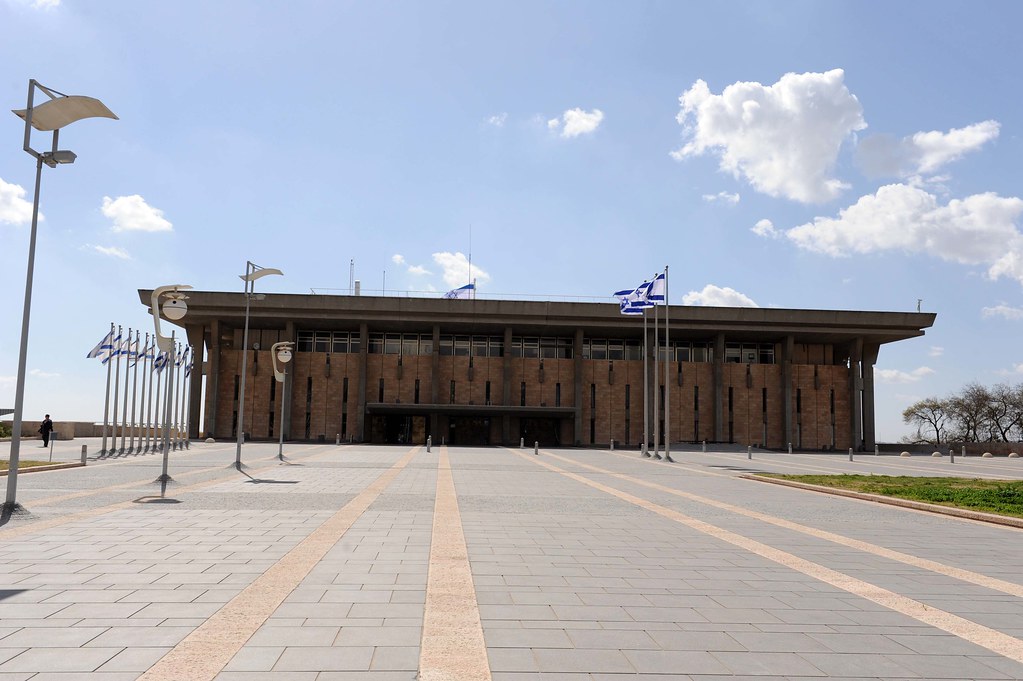
Nineteen seats now sit between Israel’s election result and a workable government. Rediff reported on Oct. 30 that the Central Elections Committee’s final tally gave Arab-led parties the remaining 19 seats, leaving the next prime minister dependent on lawmakers many rivals promised not to rely on.
The finding is not that Arab parties can simply choose the next government. It is that the election has made them necessary to the arithmetic while politics still makes them costly to use. teleSUR Arab parties left neither side with the required absolute majority, while the BBC reported on Oct. 28 that at least one leading party would probably have to break campaign promises to form a government.
Rediff reported on Oct. 30 that the two Arab-led parties won the remaining 19 seats in the Central Elections Committee’s final tally. It also reported that Ra’am won 11 seats and the Joint List won eight. That split matters because the leverage is shared, and any bargain would have to survive more than a single Arab-led party’s calculation.
The BBC reported on Oct. 28 that, with more than 97% of votes counted after Tuesday’s election, neither Benjamin Netanyahu’s coalition nor Gadi Eisenkot’s bloc looked set to win a majority.
Partial results put Netanyahu’s bloc at 53 seats and his principal rivals at 48. Those figures explain why a narrow lead did not become control. The larger bloc could still lack partners, while the smaller bloc could still govern only by crossing a line it had drawn during the campaign.
Open also reported on Oct. 29 that the routes now include an agreement across existing blocs, an opposition administration supported by Arab parties or another election if government-formation efforts fail. The choices are therefore unequal. A cross-bloc deal dilutes campaign identities, an Arab-backed administration tests voter tolerance, and a repeat election admits failure to bargain.
NBC 24 reported on Oct. 28 that Netanyahu ruled out relying on Arab-led parties and called such a government a danger to Israel. The Economic Times reported on Oct. 29 that Eisenkot ruled out forming a government with Arab parties during the campaign, citing a lack of shared values. Both men limited their own room before the final count gave those parties leverage.
The missing partner is political permission. The central obstacle is the reluctance of key Jewish-led opposition parties to rely on Arab-led parties for a governing majority. Opposition leaders face political resistance to relying on Arab lawmakers, and 联合早报 reported on Oct. 29 that cooperation with Arab parties could provoke a backlash among some Jewish voters and has divided the opposition.
Some opposition figures are pushing in the other direction. 联合早报 reported on Oct. 29 that Yair Golan, leader of The Democrats party, publicly urged allies on Wednesday to work with Arab parties to end Netanyahu’s rule. The BBC reported on Oct. 28 that Golan told partners in Eisenkot’s bloc there was an opportunity to form a change government in partnership with Arab parties and replace Netanyahu’s coalition.
Mansour Abbas is the precedent the bargain’s supporters can point to. The BBC reported on Oct. 28 that the United Arab List leader said Tuesday night that he hoped the numbers would work out so the Change Bloc and the UAL could ensure 61 Knesset seats. The Economic Times reported on Oct. 29 that Abbas joined Naftali Bennett’s government, the first time an independent Arab party entered an Israeli coalition.
Alpha’s call · sealed Oct. 31
34%
chance by Nov. 30, Alpha’s estimate
Will Israel’s newly sworn-in government command at least 61 Knesset seats by Nov. 30, 2026?
Holds if no leading bloc publicly accepts Arab-led support and reports move toward another election.
Breaks if a leading bloc publicly signs or backs an arrangement with Arab-led parties or across existing blocs.
Well below the usual rate: the cited majority benchmark is difficult amid public refusals, so the United Arab List may gain leverage if talks remain unresolved.
Alpha’s record, scored in public →The Joint List’s public position also points toward using leverage against Netanyahu. The Economic Times reported on Oct. 29 that Yousef Jabareen, the leader of the Arab-dominated Joint List, told Reuters his party would seek to use its projected seats to help remove Netanyahu’s government and change the political situation in Israel. That is a bargaining aim, not a coalition agreement.
A cleaner reading gives Netanyahu the advantage. That concession is real: if opponents cannot accept the partners their arithmetic requires, a hung Knesset can protect the incumbent even without delivering him a majority.
The Cost of Saying No
The BBC reported that forming a government would likely require a leading party to break a campaign promise. Its report said a new election may well be the most probable outcome.
The recent history gives that threat weight. 联合早报 reported on Oct. 29 that if the deadlock cannot be broken, Israel could hold another election, repeating political turmoil that saw three parliamentary elections between April 2019 and March 2020. The comparison does not prove the next step, but it shows the default path when bargaining fails.
The exposure for ordinary Israelis is a repeat campaign rather than a quick governing mandate. The exposure for parties and institutions is different: any bloc that accepts Arab-led support may gain a path to office while taking backlash risk, and any bloc that refuses may preserve its pledge while surrendering the initiative to another vote. On the public reports available here, the market signal is political timing, not a traded price.
The hinge to watch is public, not hidden: a coalition agreement across blocs, an opposition administration supported by Arab parties or a formal move toward another election. Those were the possible routes if government-formation efforts fail. A statement that names the United Arab List or the Joint List would matter more than another claim of victory.
Alpha’s call · sealed Oct. 31
34%
chance by Nov. 30, Alpha’s estimate
Will Israel’s newly sworn-in government command at least 61 Knesset seats by Nov. 30, 2026?
The vote did not hand Arab parties a cabinet seat; it handed them veto value. The next government forms only if another actor decides that breaking a promise costs less than another election.
The Last Time
Three parliamentary elections
What Rhymes
联合早报 reported that an unbroken deadlock could repeat the political turmoil that saw three parliamentary elections between April 2019 and March 2020.
What Is Different
The current count gives Arab parties a potentially decisive role, while the earlier episode is cited only as a warning about repeated elections.
What It Means for the Forecast
That history suggests the cost of failed bargaining is not abstract: the fallback can be another national vote rather than a quick government.
Sources: 联合早报, Oct 29, 2026; indiatoday.in, Oct 30, 2026; telesurenglish.net, Oct 29, 2026
Alpha’s record
- Resolved
- 9
- Brier
- 0.240
- Open
- 77
Sources
Rediff Oct. 30BBC Oct. 28nbc24.com Oct. 28telesurenglish.net Oct. 29联合早报 Oct. 29Open Magazine Oct. 29indiatimes.com Oct. 30indiatoday.in Oct. 30The Economic Times Oct. 29
27 statements, each tied to its sourceWhat each statement rests onHow ARCANE checks a story