Japan and Argentina publicly intervene in currency markets as US joins yen defense
Tokyo and Buenos Aires revealed and justified interventions, signaling open coordination as finance ministries revise strategies for defending exchange rates.
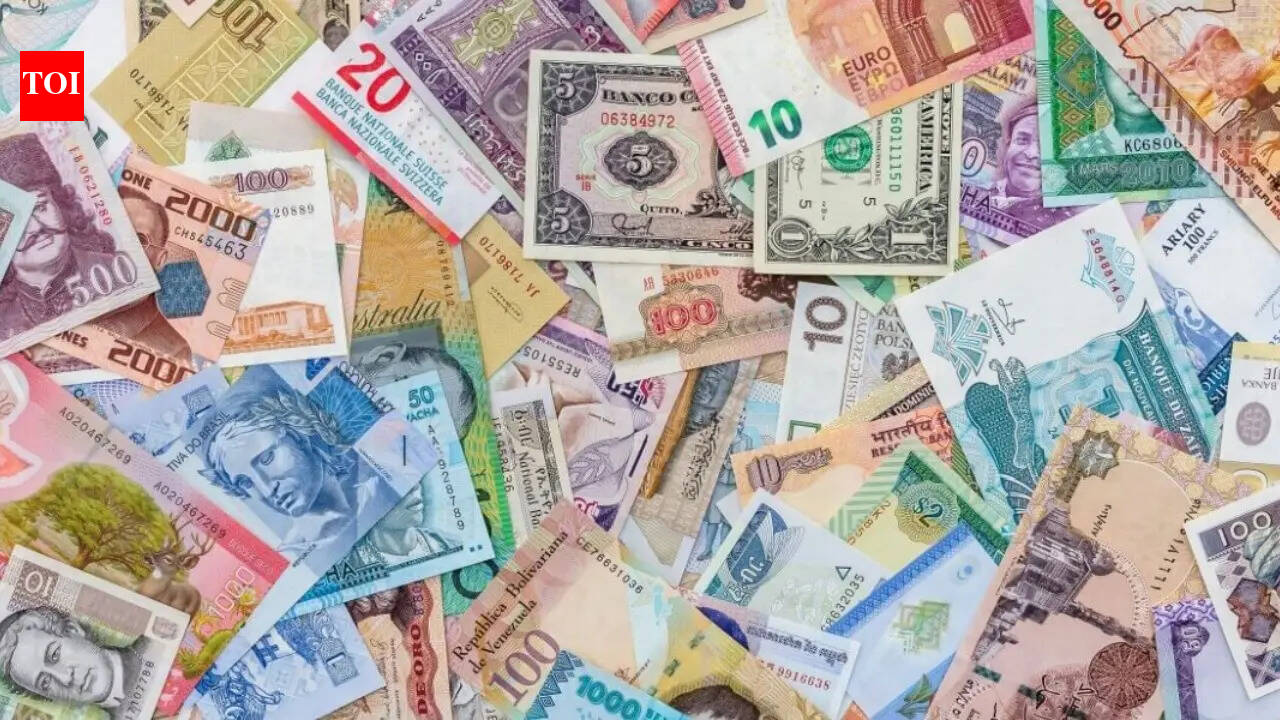
Japan's finance ministry and Argentina's central bank intervened in currency markets this month, actions their predecessors might have likened to public confessions. Japan, for the first time in a generation, bought its own yen alongside the United States Treasury.
While Argentina stepped into the peso market after the currency breached the trading band it had promised the IMF it would defend with flexibility rather than force.
Neither operation happened in secret. Both were announced, itemized, and defended through public statements within days — Japan’s finance ministry detailed its move in an August 3 statement, as CNBC noted on August 4.
More than two currency defenses are at stake. Historically, rich countries made statements while poorer countries spent reserves, but now Washington stands on Tokyo’s side of the trade, and Buenos Aires turns its currency band into a widening mechanism. Should these measures become standard procedure, any finance ministry with an exchange-rate commitment faces a new model, and every saver holding those currencies inherits the consequences.
The yen approached 161.59 to the dollar in late June, nearing its weakest level since the 1980s. Tokyo had already issued warnings that it could intervene on short notice, as reported by Reuters and Japan.co.jp on June 23.
The joint action was preceded by a spring campaign that cost a record 11.73 trillion yen, about $72 billion. Kyodo News reported in June 2026 that this included a single-day record of 6.28 trillion yen (roughly $40 billion) on April 30 alone.
On July 31, Japan’s finance ministry intervened “in coordination with the U.S. Department of the Treasury,” citing excessive market volatility and referencing the September 2025 joint statement between the two countries. Finance Minister Katayama Satsuki affirmed this in the August 3 statement.
Washington’s participation was confirmed by Treasury Secretary Scott Bessent, who said the action corrected a “substantially undervalued” yen, according to Aju Press on August 3.
Tokyo buys, Buenos Aires widens
The Argentine peso broke through the government-set trading band in August, prompting a central bank intervention with foreign-currency reserves, as reported by AInvest.
Early Bird’s Invest tallied the week’s spending near $1 billion, marking Argentina’s largest defense effort since 2019.
President Javier Milei’s administration also moved to relax post-2001 restrictions, permitting banks to lend dollars to firms earning pesos — a maneuver Bloomberg described on August 13 as a bet on returning confidence outpacing further currency weakness.
For three decades, the convention was that wealthy countries relied on words and poorer countries defended with reserves. Japan upended this in 2022, repeatedly acting alone — until this month, when the United States, the currency issuer of last resort, joined the defense and sold dollars, as Quartz noted on August 3. This marked the shift from improvised emergency to a prearranged doctrine.
Argentina’s contribution is distinct but connected. Its band is now inflation-indexed, widening monthly while the central bank accumulates reserves within the corridor. The Buenos Aires Herald described this structure on December 15, 2025, and the IMF’s 2026 Article IV staff report for Argentina endorsed it, urging continued reserve purchases and flexible exchange rates. The new approach is not a fixed defense but a measured retreat.
What each capital wants
Officials in Tokyo want a weaker yen to boost exports and reflate the economy, but cannot allow abrupt depreciation since import costs hit households before export revenues offset the pain. A survey by Tokyo Shoko Research found that 40.7 percent of Japanese firms reported adverse effects from the weak yen, as International Business Times Japan noted in June 2026 — the benchmark under Katayama’s interventions. The Bank of Japan aims to normalize policy rates without triggering unwinding of the carry trade, which sees global investors borrow yen to buy higher-yielding assets abroad.
Bessent’s goals include maintaining a stronger yen as part of regional policy, warning that persistent yen weakness could ignite competitive devaluations across Asia, according to ING FX Daily’s August 2026 commentary. Axios, on August 3, added that America’s intervention allowed Japan to smooth currency moves without selling Treasury bonds into a sensitive market. Milei, meanwhile, wants a credible peso to curb inflation but is wary of depleting reserves needed for solvency proof. Each capital’s best-case outcome depends on someone else absorbing the costs.
Soros against the band
In 1992, Britain’s attempt to keep the pound within the European exchange-rate mechanism despite contradictory domestic policy allowed George Soros’s fund to profit by betting on a collapse — a lesson that defending a misaligned band can be costly. Today's revision, written in Buenos Aires and Tokyo, is to manage depreciation in public, pre-commit to band widening, intervene to slow the pace rather than freeze the level, and bring in a reserve-currency backer when possible.
The Hong Kong experience of 1998 offers a counterpoint. Its dollar peg withstood the Asian crisis, partly because its fundamentals — a strong banking system and well-backed currency board — matched the commitment. The OMFIF analysis of August 7 argued that Japan’s policy misalignment is itself a weakness, questioning the wisdom of intervention and America’s role. Hong Kong’s success, the analysis stressed, came through consistent fundamentals rather than defensive firepower.
Who pays, who profits
Japan has spent over 11 trillion yen this year defending a currency it simultaneously wants to weaken, with each intervention buying less time — and, as Fortune reported on August 20, the yen lost some ground shortly after each defense. The carry trade now treats these operations as opportunities to sell into short-term floors, not as trend reversals. The precedent is set: if the U.S. will back Japan, any finance ministry with IMF ties or security partnerships may seek similar support, and Argentina’s band becomes a template.
Those who pay include Japanese importers and households, Argentine peso savers, and ultimately American taxpayers in reputation, as a Treasury willing to sell dollars may undermine the strong-dollar pledge. Those who profit are exporters and investors who trade around intervention events, using government accounts as counterparties.
Exposure for investors materializes in clear channels. The yen carry trade, shielded from sudden collapse but still crowded, is implicitly underwritten by speed controls. Japanese government bond auctions become a pressure point, since currency intervention drains domestic liquidity — the 2.6 trillion yen 10-year auction settled in early August, highlighted by a Japan market report from August 2026, is a sign to watch. In Argentina, dollar bonds and equities move with the band’s survival, and central bank actions show a willingness to spend real reserves as AInvest reported in August 2026. The authorities do not offer advice, only a map of risk.
Confirmation would come through another coordinated intervention under the September 2025 joint statement when the yen nears 160, ideally recorded in Japan’s quarterly intervention ledger released on August 7. The thesis would be broken if Washington declined to intervene next time, or allowed the yen to slide below prior lows, exposing the arrangement as a one-off rather than doctrine, and reverting emerging markets back to the old method of silent, last-resort spending.
An Osaka retiree now shops in a currency that her government actively weakens even as it intervenes to defend it. The rule being drafted in Buenos Aires and Tokyo has currencies falling on schedule, observed by all. Markets are under no such constraint.