A Chinese carrier opened a weekly Arctic lane that skips Suez entirely
The shortcut over Russia only works because a war closed the long way round, and the carrier betting on it is too small to matter until suddenly it isn't.
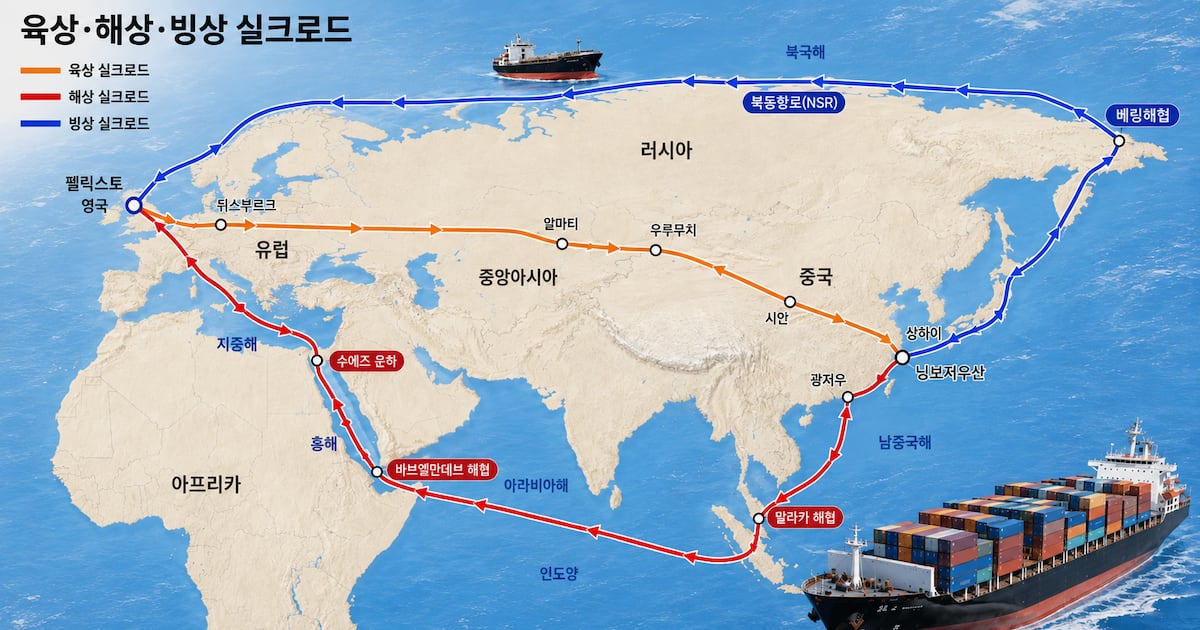
The Dubai Tower left Ningbo on August 12 carrying containers bound for Felixstowe, bypassing Suez, Malacca, and any area within reach of Houthi drones. It travelled north over Russia, where Rosatom's nuclear icebreakers clear the path and Moscow’s permits dictate who sails.
Following this voyage is a schedule, not an experiment: eight sailings between August 12 and October 27, operated by China’s Sealegend Shipping, launching the first weekly liner service in the history of the Northern Sea Route. The route is notable for someone offering reliability on a stretch historically defined by unpredictability, now with willing customers.
The ships are modest. Sealegend’s largest vessel for this service is the 4,890-TEU Istanbul Bridge, a fraction of the 20,000-TEU giants dominating Asia-Europe trade, as gCaptain reported on July 15. Cargo consolidated at Ningbo-Zhoushan can reach Felixstowe in as little as 18 days, compared with more than 40 days via Suez, according to The Guardian on August 17.
Iran’s war has turned Hormuz into both toll booth and target, with Suez volumes battered since late 2023. Even U.S. Senator Marco Rubio called for shippers to find new routes rather than wait out Hormuz, The Guardian wrote on August 17. Sealegend’s chief operating officer, Li Xiaobin, said this month that Middle East turmoil had exposed the fragility of the southern route, urging the development of alternatives, as The Guardian noted on August 17.
South Korea responded quickly; its test ship, the PanStar Acro, left Busan on August 22 with 837 TEU of cargo and government backing, Al Jazeera reported on August 22.
Al Jazeera, citing Paran Ocean Citizen Science Center, stated on August 22 that the Arctic is warming roughly four times faster than the planet as a whole, expanding the navigable ice-free window by another week or two every summer. Transit counts mirror this change: 43 passages in 2022, 97 in 2024, and 103 last year, by Norway’s Centre for High North Logistics, as relayed by Al Jazeera on August 22. The route’s recent popularity is not new; Xi Jinping called for a “polar Silk Road” with Russia in 2017 and, as The Guardian said on August 17, waited nearly a decade for conditions to allow regular service.
The Suez closure from 1967 to 1975 after the Six-Day War provides a clear analogue. When the canal closed, shipbuilders ordered supertankers sized for the Cape of Good Hope detour, and when Egypt reopened the waterway much of the traffic never returned as hardware and habits had shifted. Chokepoint closures do not just reroute cargo—they fund rivals. The key difference now: the rival route is owned almost entirely by Russia, which collects fees for escorts, grants permits, and could close the passage with a signature.
Maersk sent the Venta Maersk through the Northern Sea Route as a demonstration in 2018 but did not repeat it, as gCaptain noted on July 15, due to the economics of ice, insurance, and schedule risk. CMA CGM, MSC, and Hapag-Lloyd have all pledged publicly to avoid Arctic container shipping under environmental pressure, according to Al Jazeera on August 22. With the large carriers opting out, Sealegend sails alone; Maersk is absent from the route.
Rosatom profits first. Each voyage purchases Russian nuclear escort and permission, converting Beijing’s commercial ambitions into Russian currency and legitimacy for a route Moscow wants sanctioned customers to rely on. Sealegend profits second. It occupies a niche secured by environmental pledges from major carriers, at least while the Arctic season lasts and reputations supersede transit times. Cargo owners transporting temperature-sensitive products, electric vehicles, lithium batteries, and solar gear secure Europe deliveries in under three weeks without crossing war zones, as The Guardian reported on August 17.
Bellona’s 2025 assessment found Russia has no capacity to contain an oil spill in the Arctic, where recovery teams may take weeks to reach a stranded vessel and heavy oil frozen in ice essentially never breaks down, The Guardian noted on August 17. Allianz's principal marine risk consultant for Asia, Capt Nitin Chopra, warns of increased risk for breakdown or grounding in a region lacking logistics support (The Guardian, Aug 17). None of these risks appear in Sealegend’s freight quote; the cost falls on coastal communities, fisheries, and hull underwriters, and will be repriced after the first loss.
Can a seasonal service prove anything about year-round viability? Eight sailings from mid-August to late October mark an eleven-week corridor; winter closes the route entirely, as gCaptain described on July 15. If Sealegend’s trials end and nothing follows, it echoes Maersk’s 2018 experience. If orders arrive, confirmation comes as a second operator announcing a 2027 season, Seoul scheduling PanStar ahead of its 2030 target, or Rosatom reporting permit volumes beyond Chinese accounts. An abandoned service was a press release; a repeated service marks infrastructure.
The consequences reach two places that rarely share the same news. European importers see eighteen days instead of forty and call it progress. The crews sailing between Franz Josef Land and the New Siberian Islands face weeks-long waits for salvage, on seas where help arrives by helicopter.
The Arctic route exists because two wars made central routes expensive. Its price gets set by whichever conflict impacts the top of the map first.